







Your first Canadian Halloween doesn’t have to be confusing. Learn the rules of trick-or-treating, choosing costumes, handing out candy, staying warm, and enjoying the festivities like a local. by SoftCanada





Somewhere in Canada right now, a perfectly normal accountant is gluing fake cobwebs to a hedge. A dentist is choosing between a vampire cape and an inflatable dinosaur suit. And a seven-year-old is planning a candy-collection route with the precision of a military operation.
Welcome to Halloween, October 31. This year it falls on a Saturday, so expect the full experience.
If you’re new to Canada, here’s everything you need to survive, and maybe even enjoy, your first one.

First, how big a deal is this?
Big. In a 2025 Leger survey, almost half of Canadians (46%) said they would hand out candy, and nearly four in ten (39%) planned to decorate their homes. On average, Canadians expected to spend $44.32 on candy alone.
And it isn’t just for kids. About a third of adults (31%) said they would celebrate too. So if your coworker shows up to a Friday meeting dressed as a taco, do not be alarmed. Compliment the taco.
Rule 1: The porch light is the password
This is the most important rule, and nobody will explain it to you.
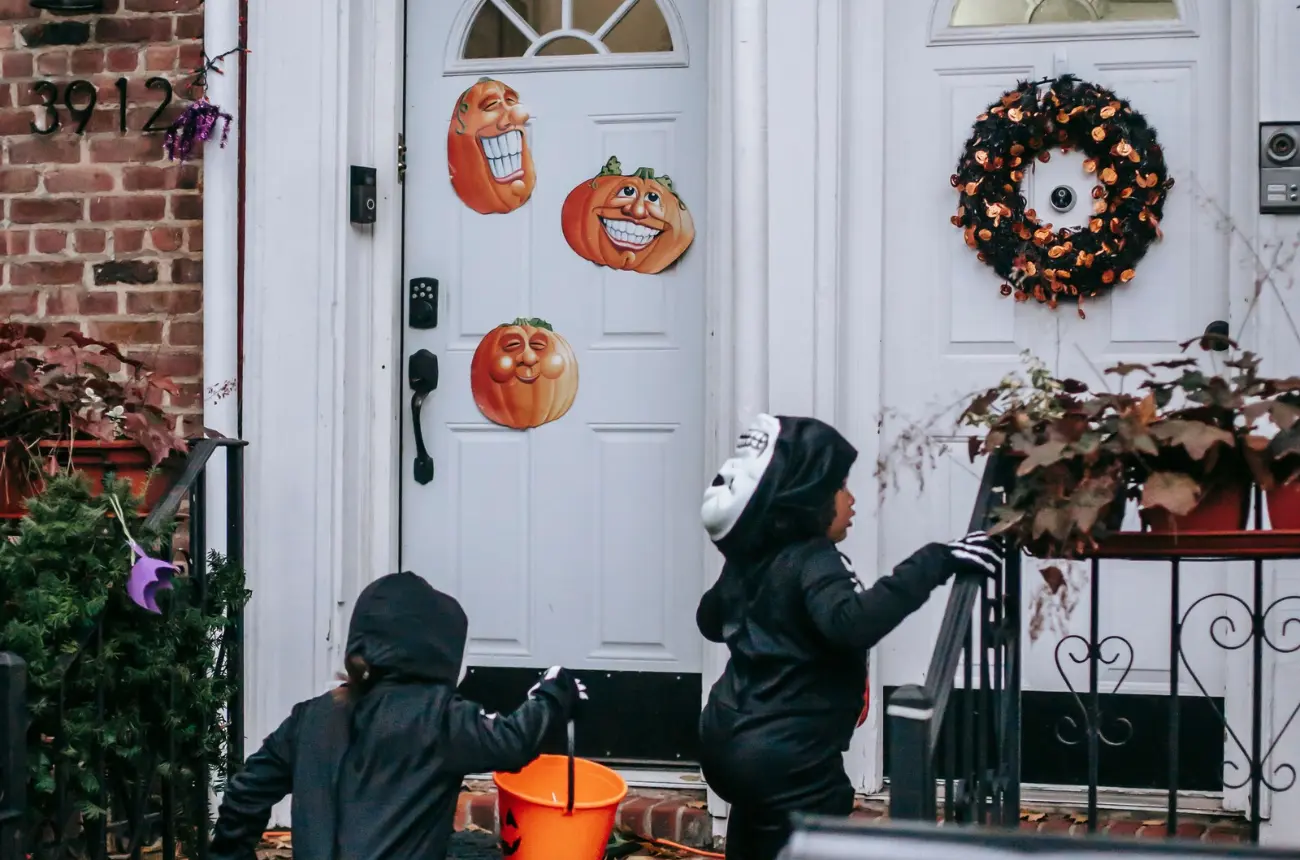
A porch light on, a carved pumpkin or decorations at the door means: we’re open, come and get candy. A dark house means: please leave us alone. Trick-or-treaters respect this completely.
So decide early. If you’re not handing out treats, turn your outside light off and enjoy your evening. If you are, light up and get ready for the doorbell.
Rule 2: Know the script
The kids will ring your bell and shout “Trick or treat!” You smile, admire their costumes and drop one or two treats into their bags. They say “Thank you!” (usually prompted by a parent hovering at the end of the driveway), and off they go.
No tricks will actually be played. Despite the name, it’s a treat-only economy.
Rule 3: Stock up, and choose wisely
How many kids will come? It depends on your street. A 2025 Field Agent Canada study found that households in Western Canada averaged 56 trick-or-treaters each. Buy more than you think you need. Running out at 7:30 p.m. and turning off your light in shame is a rite of passage you can skip.
What to give? Chocolate is king: in the same study, 86% of households handed it out. Chips and Cheezies are a solid backup.
One more thing: hand out only sealed, store-bought treats. Homemade cookies are lovely in theory, but parents are taught to toss anything unwrapped.
Rule 4: Your costume doesn’t need to be expensive
If you’re going to a party or your workplace dresses up, you don’t need to spend a fortune. Dollar stores and thrift shops are full of options, and Canadians love a clever homemade costume.
One caution: avoid costumes that mock real cultures or religions. Canadians take this seriously, and “it’s just a costume” won’t save you at the office.
Rule 5: Dress for the weather, not just the theme
This is Canada. October 31 can be crisp, rainy, or in some places already snowy.
That’s why you’ll see princesses in parkas and superheroes in snow pants. If you’re taking kids out, plan the costume to fit over a warm coat. Nobody has ever regretted a toque.
Rule 6: There’s an unofficial age limit
Who’s too old to trick-or-treat? Canadians have opinions. In the Leger survey, people put the average age limit at 16, though a quarter (26%) said there’s no limit at all.
If a tall teenager in a half-hearted mask rings your bell, just give them the candy. It’s Halloween.
Rule 7: Safety, the quick version
Rule 8: Know the extras
The bottom line
Halloween can look strange at first: adults in costumes, skeletons on lawns, and strangers handing out free chocolate. But underneath the plastic spiders, it’s one of the friendliest nights of the year. Neighbours open their doors, families walk the streets, and you’ll meet more people on your block in one evening than in the whole month before.
So turn on your porch light. Buy the good chocolate. And if anyone asks what you’re dressed as, “a newcomer surviving my first Canadian Halloween” is a perfectly valid answer.


SoftCanada does not assume responsibility for content published on external websites or sourced from third parties.











Your First Canadian Halloween: A Newcomer’s Survival Guide
Rent Is Finally Coming Down in Some Canadian Cities. Should Newcomers Be Excited?
Canada vs. the United States: Where Is It Easier for an Immigrant to Build a Life? — Part 2
Fonthill Welcomes Fountain Veritas Medical Centre
Inside the Expedier Business Gala: A Room Full of Business Owners and a Platform Ready to Back Them
A New Governor Takes the Helm: Uche Okugo Installed as District Governor of Rotary International District 7080
Built on Belief and Backed by Great Deals: Soft Canada Auctions Launches to make winners every week.
How to Survive Your First Winter Without Overspending
The Truth About Loneliness Among New Immigrants in Canada
BISC MedSpa & Cosmetics Opens Its Doors in Etobicoke — Beauty Gets a New Home in Toronto